
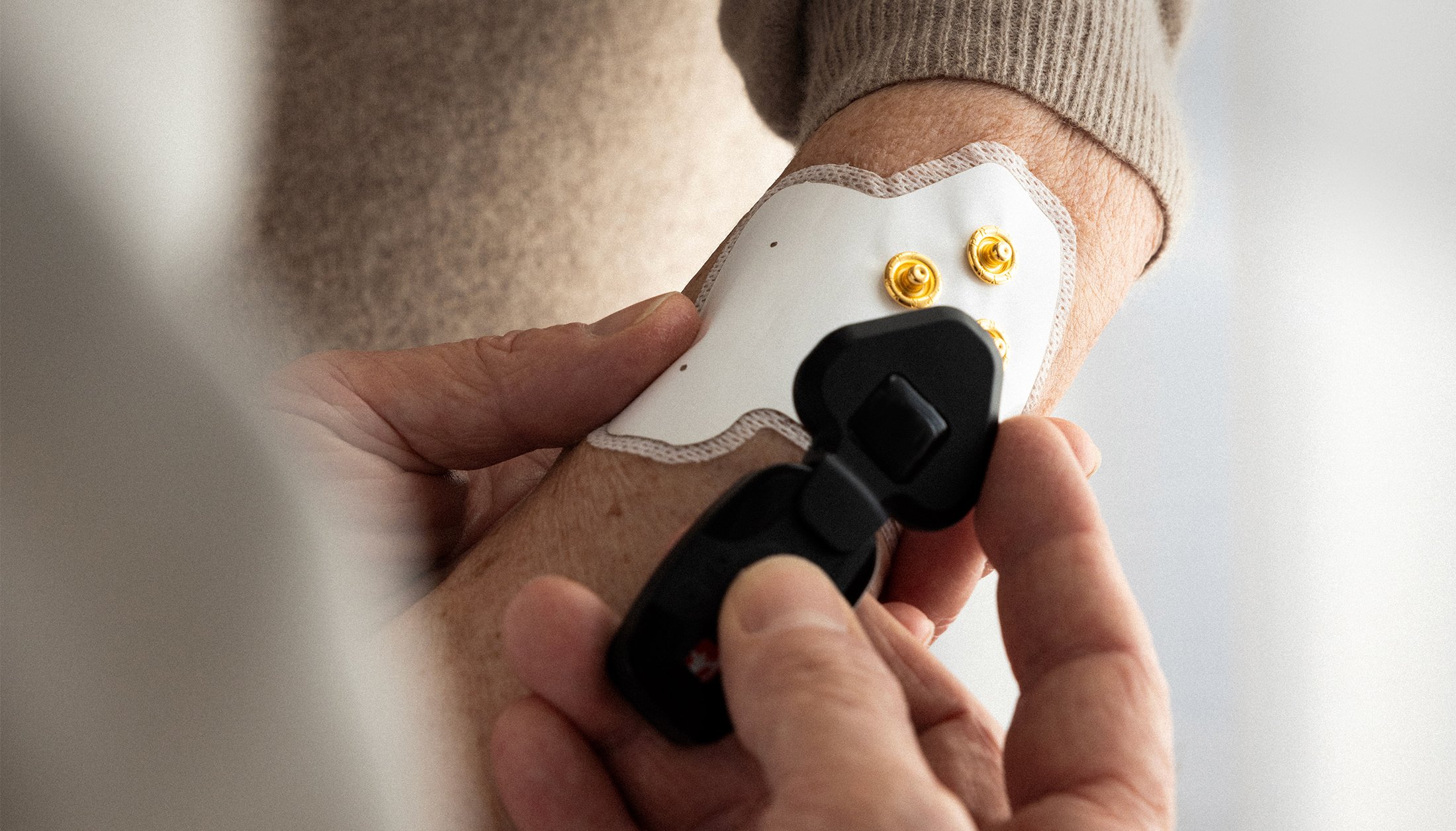
The Adamant Health measurement and analysis service complements clinical assessment and helps clinicians gain a more holistic view of a patient’s condition by collecting symptom data over an extended period and at home.
We have developed the first research-based precision technology for measuring both visible and invisible motor symptoms of Parkinson's disease (PD). By combining surface electromyography (EMG) and kinematic measurements, we add the measurement of neuromuscular signals to motion measurement for deeper insight into muscle activity.
With EMG and kinematic measurement, it is possible to differentiate between visually similar symptoms, detect and measure rigidity, differentiate side effects, and detect symptoms not yet physically visible. By cross-validating findings across the two technologies – EMG and kinematic measurements – more meaningful and holistic clinical insight can be provided to support therapeutic decision-making and treatment planning.
EMG and kinematic measurement device for accurate symptom assessment

The measurement device provided as part of the Adamant Health measurement and analysis service comprises a compact sensor (CE-marked medical device), electrodes, and an adapter. The small, lightweight sensor, which measures neuromuscular signals and motion, is waterproof (IP67) and enables continuous measurement for several days without recharging. Thus, the sensor does not need to be removed during the measurement, for example, for charging or personal care.
We are currently working to introduce a one-piece electrode patch to provide premium comfort during measurement. The new electrode patch will eliminate cables, making it easier for healthcare professionals to install the equipment and more comfortable for the patient to wear.
The measurement device is provided in a self-contained case for easy handling, storage, and shipping when the measurement is performed in the patient’s home environment.
The Adamant Health clinic application for seamless use of our service

The user-friendly Adamant Health clinic application enables full use of the Adamant Health measurement and analysis service. It guides the healthcare professional through the measurement process, provides a personalized diary for each patient, and delivers the symptom report for the treating clinician.
An intuitive user interface and optimized workflows make the application effective and easy to use. Limited data input reduces administrative effort to a minimum.
Easy-to-use patient diary specifically developed for people with Parkinson's disease

Our patient diary, particularly developed for people with Parkinson’s disease, offers an easy and secure way to collect accurate information on the patient's medication intakes, symptoms, and well-being for clinical use. The patient diary is fully integrated with the Adamant Health service, making it easy to use with minimal administrative effort and a high level of data privacy and security.
The information for accessing each patient's personalized diary is retrieved directly from the clinic application used by the healthcare professional and handed to the patient when the measurement is started. The patient does not need to install any software to use the diary.
Easy-to-read symptom report with detailed symptom data
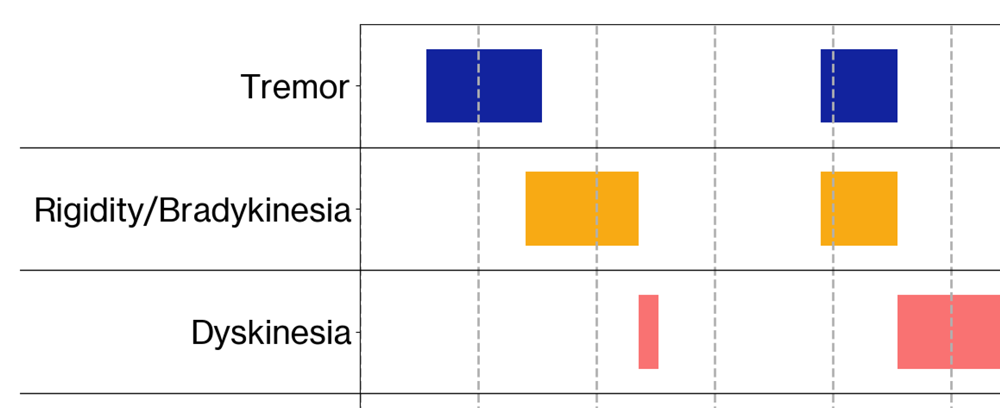
After the measurement, the clinician receives a clearly structured, easy-to-read report with detailed and accurate symptom data. The symptom report includes a graphic visualization of the changes in the patient’s condition, an overview of the detected symptoms, including their timing, and a summary of the symptoms reported by the patient.
The main page of the report presents the required information to capture the condition of the patient at a glance, while additional pages provide more details for each day of the measurement.
The Adamant Health measurement and analysis service enables clinicians to obtain a detailed overview of their patients’ actual symptoms over an extended period, allowing the development of highly personalized treatment plans for optimal symptom control.
In addition, regular assessments of the patient’s symptoms allow clinicians to identify patterns and trends and better understand the progression of the disease. Regular measurement also helps to objectively monitor the treatment's effectiveness and maintain a better care balance for the patient.
Would you like to learn more about our service or take it into use in your practice or clinic? Schedule a consultation with our specialists.