Revolutionizing the care of Parkinson’s disease
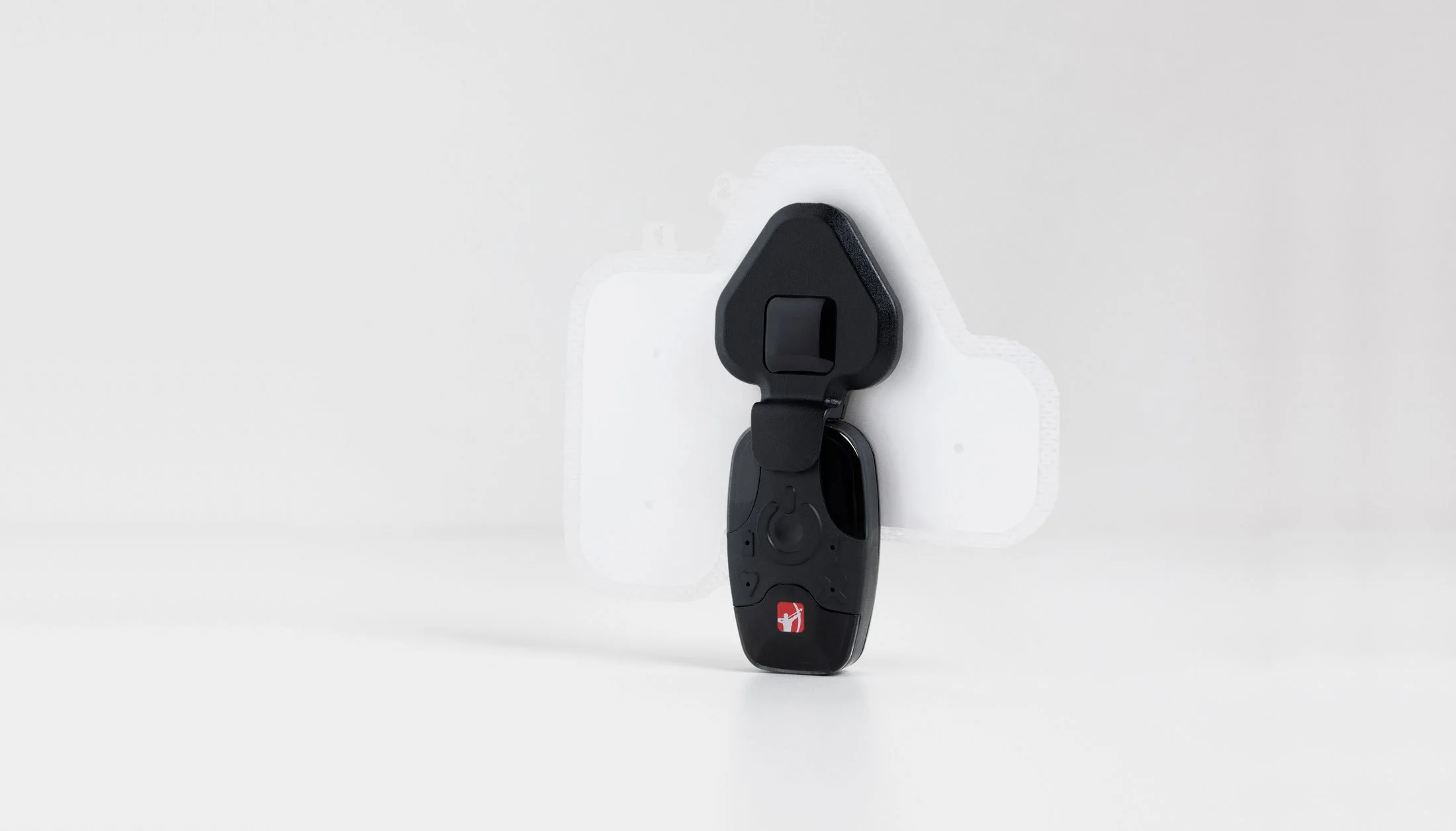
We have developed the first AI-powered, research-based precision technology to measure the motor symptoms of Parkinson's disease – relying on the combination of two proven technologies, electromyography (EMG) and accelerometry.
EMG and kinematic measurements for unparalleled accuracy in symptom assessment
At Adamant Health, we have developed the first AI-powered, research-based precision technology to measure the motor symptoms of Parkinson's disease (PD). We rely on the combination of two proven technologies – electromyography (EMG) and accelerometry – for unparalleled accuracy in symptom assessment.
EMG for deeper insight into muscle activity
Using a novel mathematical method for combining EMG and kinematic data for the evaluation of PD symptoms enabled in 2006 a breakthrough in discriminating between PD patients and healthy persons, and the treatment effects at the neuromuscular level to be quantified. The research executed at the University of Kuopio, today the University of Eastern Finland, in collaboration with clinical partners, included nine different patient studies in Finland, the US and China. Over 200 patients and 100 healthy controls participated in the research.
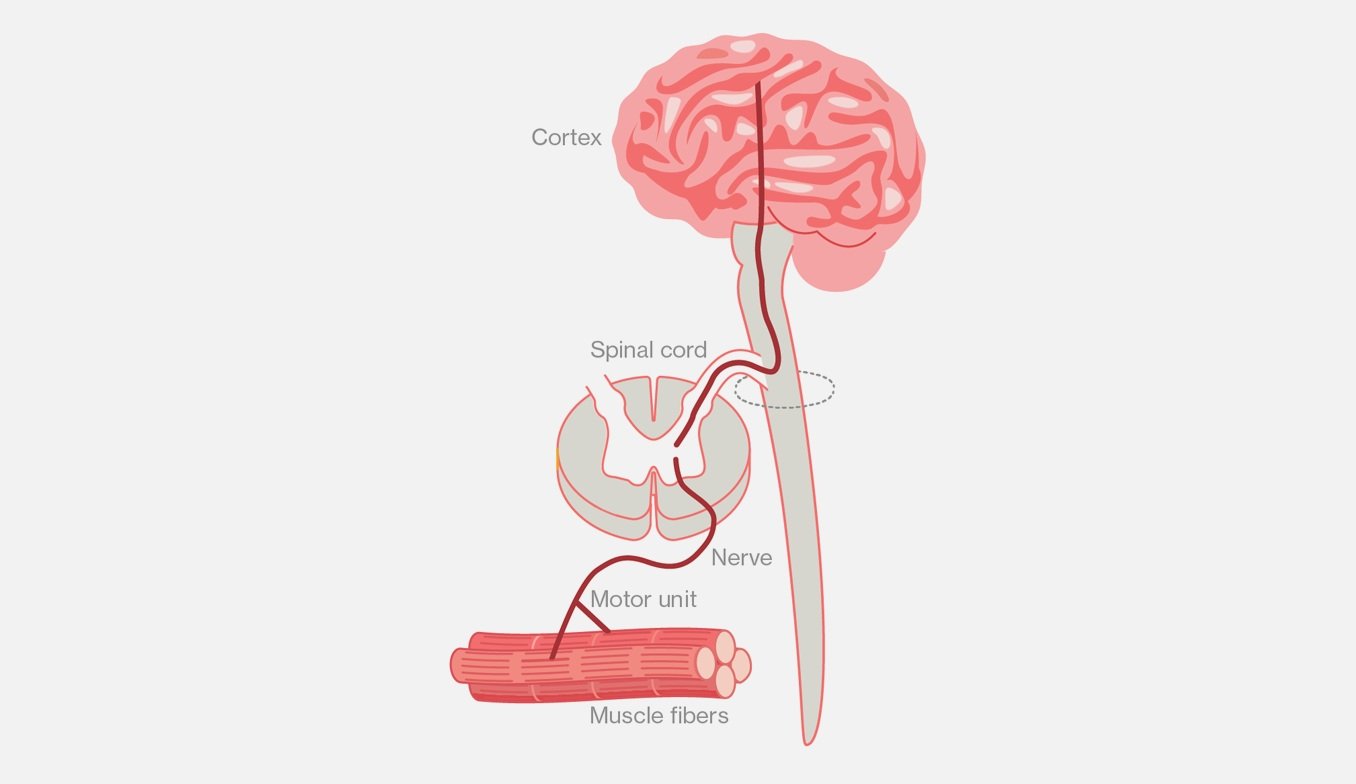
EMG measures the amount and timing of electrical activity produced by the skeletal muscles and the nerves that control them, detecting issues with motor coordination, motor nerves, muscles, or the communication between them. The EMG signal appears as a spikey-looking, impulse-like waveform. In PD, the morphology of the EMG signal changes, containing essential information about the disease.

Research-driven algorithms bring clinically meaningful insight
The signal parameters conventionally used for EMG analysis, including amplitudes and mean or median frequencies, are not effective enough in capturing impulse-like structures. Adamant Health applies a novel method based on machine learning (ML) using signal morphology with highly advanced mathematical algorithms to quantify EMG signals from PD patients. Our highly advanced data-analysis technology and algorithms are built on 20 years of academic research.
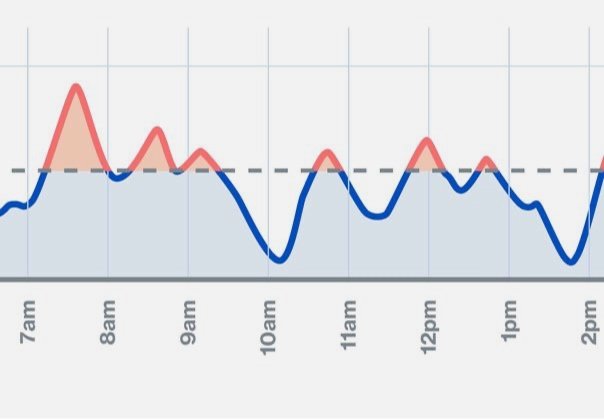
By measuring the symptom itself and combining EMG with kinematic data, it is possible to reach a level of accuracy with motor symptom data that has not yet been seen. It is also possible to detect emerging, not yet physically visible symptoms and measure rigidity, which is not possible with any other technology.
Paradigm shift to patient-centric care with real-world data and AI
Already today, our technology provides clinically meaningful and actionable data to transform the current gold standard in Parkinson’s care into fact-based treatment optimization, enabling personalized and remote care.
With the clinically validated, longitudinal, and multidimensional real-world patient data collected in our AI platform, we are in a unique position to continuously develop and serve our AI models, enabling a transition from a clinic-controlled to a patient-centric care model, and ultimately leading to real-time care optimization.
The next-generation Parkinson’s care will impact every stage of the care pathway to achieve an optimal care balance for the patient. This will enable people with Parkinson’s to live full and independent lives and simultaneously reduce the burden on the healthcare system.
Latest white papers