New study shows signs of Parkinson’s disease in healthcare data up to 18 months before diagnosis
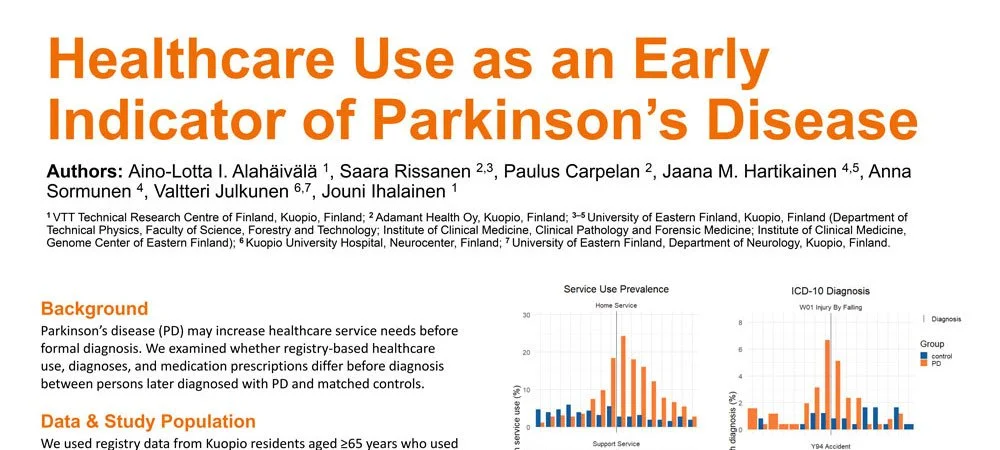
A new study presented at the Kuopio Neuroscience 50 Years Symposium shows that healthcare registry data may reveal early signs of Parkinson’s disease well before a formal diagnosis is made. The research was conducted in collaboration with VTT Technical Research Centre of Finland, the University of Eastern Finland, and Kuopio University Hospital, and was funded by the European Regional Development Fund (ERDF).
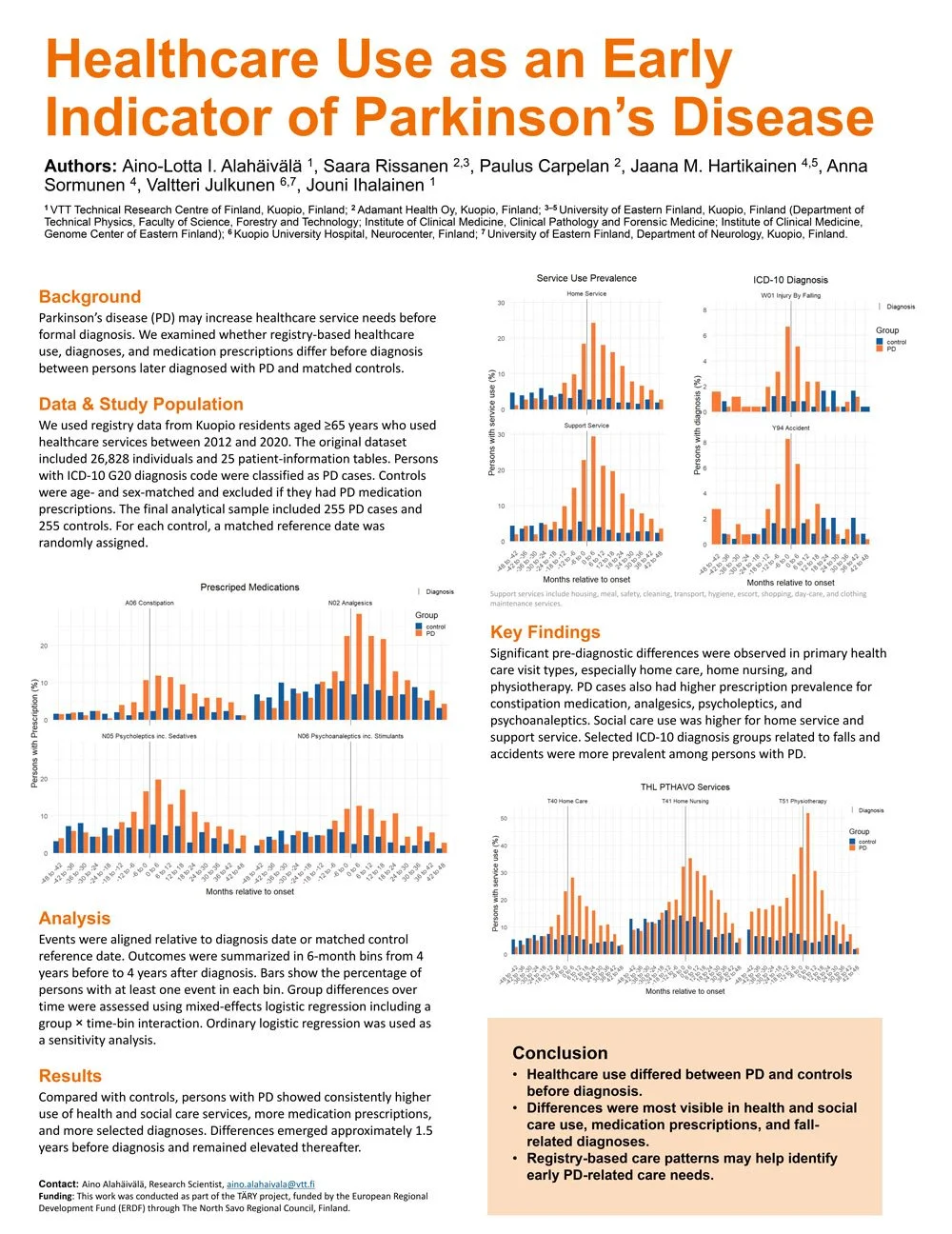
The study analyzed healthcare registry data from more than 26,000 residents of Kuopio, Finland, aged 65 years and older. Researchers compared 255 people later diagnosed with Parkinson’s disease with 255 age- and sex-matched controls. The objective was to determine whether patterns in healthcare use, diagnoses, and medication prescriptions differed before diagnosis.
The results showed clear differences emerging approximately 1.5 years before diagnosis. People who later developed Parkinson’s used health and social care services more frequently than controls. The largest differences were seen in home care, home nursing, physiotherapy, home services, and support services. They were also more likely to receive prescriptions for constipation medication, analgesics, psycholeptics, and psychoanaleptics. Fall- and accident-related diagnoses were also more common.
These findings suggest that routinely collected healthcare data may help identify Parkinson’s-related care needs earlier in the disease course. While registry data cannot diagnose Parkinson’s disease, patterns of healthcare use may provide valuable signals that support earlier recognition and intervention.
For Adamant Health, the findings reinforce the potential of advanced analytics and AI to reveal meaningful patterns and trends in real-world healthcare data. Understanding how healthcare use changes before a Parkinson's diagnosis may help researchers and healthcare systems better recognize evolving patient needs and explore opportunities for earlier engagement and care planning.